President Donald Trump warned Iran on February 19, 2026, that “bad things” would occur if Tehran failed to reach a nuclear agreement within 10 to 15 days. The statement came as the United States positioned additional military assets in the region, including the USS Gerald R. Ford aircraft carrier approaching the eastern Mediterranean.
Iran responded through its UN ambassador, Amir Saeid Iravani, who informed the Security Council that while Tehran does not seek war, any US aggression would trigger a “decisive and proportionate” response. He designated all US bases and assets in the region as legitimate targets in such a scenario.
Indirect nuclear talks in Geneva produced limited progress this week. A senior US official, speaking anonymously, confirmed Iran agreed to submit a written proposal addressing American concerns. However, broader demands—including curbs on Iran’s ballistic missile program and ties to proxy groups—remain unaddressed.
Trump reiterated the need for a “meaningful deal,” noting past difficulties in negotiations. He has held off on military action despite earlier red lines related to protester killings and executions, choosing instead to reengage diplomatically after disruptions from last year’s conflict.
The deployment of the Ford carrier bolsters US strike capabilities if talks collapse. Tracking data placed the vessel off Morocco’s coast midweek, suggesting a potential transit through the Strait of Gibraltar within days. Full positioning near Iran would require over a week.
An additional 50 US combat aircraft, including F-35s, F-22s, and F-16s, received orders to deploy to the region this week. These join hundreds already stationed across Arab Gulf states, reinforcing Trump’s repeated threats of a major air and missile campaign.
Iran Conducts Drills Amid Rising Tensions
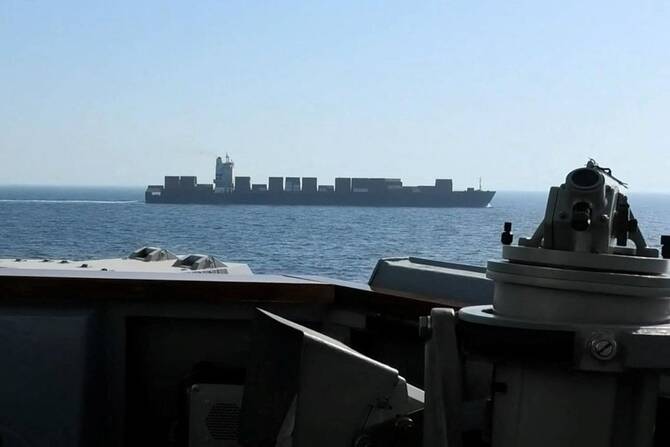
Iran’s Revolutionary Guards Corps carried out live-fire exercises in the Strait of Hormuz earlier this week. Footage showed naval special forces boarding a vessel during the operation.
Annual joint drills with Russia took place Thursday in the Gulf of Oman and Indian Ocean. Iran’s state media described the exercises as aimed at improving coordination and sharing military experience. Tehran also issued rocket-fire warnings to regional pilots, indicating planned anti-ship missile launches.
These activities underscore Iran’s readiness to defend key waterways. The Strait of Hormuz handles about one-fifth of global traded oil, making any disruption a significant risk to energy markets.
Inside Iran, vulnerability persists after Israeli and US strikes on nuclear and military sites last year, followed by mass protests violently suppressed in January. Mourning ceremonies for slain protesters have featured anti-government chants despite official threats.
International Reactions and Preparations
Polish Prime Minister Donald Tusk urged citizens to leave Iran immediately, warning that evacuation options could vanish within hours or days. The Polish Embassy in Tehran showed no signs of drawdown.
Germany relocated a mid-two-digit number of non-essential personnel from a base in northern Iraq, aligning with partner actions while maintaining a presence to train Iraqi forces.
Israeli Prime Minister Benjamin Netanyahu stated Israel stands prepared for any scenario. He warned that an Iranian attack would provoke an unimaginable response. Netanyahu, who met Trump last week, advocates a comprehensive deal addressing not only nuclear issues but also missiles and proxy support for groups like Hamas and Hezbollah.
Iran insists current talks should focus solely on its nuclear program. Tehran claims no uranium enrichment has occurred since last summer’s strikes, which Trump described as having “obliterated” key sites. International inspectors remain barred, leaving damage assessments uncertain.
Outlook for Trump Iran Nuclear Deal
The 10- to 15-day deadline sets a tight timeline amid mounting military postures on both sides. Regional officials have privately advised Iranian counterparts to take Trump’s rhetoric seriously, citing his approach to other global issues.
One senior official suggested focusing near-term pressure on nuclear concessions while deferring missile and proxy demands. However, a limited US strike could prompt Supreme Leader Ali Khamenei to withdraw from talks entirely.
As forces position and drills continue, the coming weeks will test whether diplomacy prevails or escalation becomes unavoidable. The combination of hardened positions, regional alliances, and strategic waterway control raises the stakes for global energy security and stability in the Middle East.