Philippines fuel price hikes have triggered strong warnings from the government as officials move to prevent fuel retailers and hoarders from exploiting the global oil crisis. Authorities say companies that attempt to profit unfairly from the situation could face legal consequences and even lose their licenses to operate.
The warning comes as consumers across the country feel the impact of sharply rising fuel costs. The surge follows supply disruptions linked to tensions in the Middle East, particularly the tanker squeeze in the Strait of Hormuz. As prices climb, some gasoline stations have already started rationing fuel supplies to manage demand.
Palace press officer Claire Castro warned fuel companies against taking advantage of the crisis. She said businesses that engage in profiteering would face serious consequences. According to her, companies risk criminal charges and could also lose the ability to continue operating if they violate pricing rules.
Meanwhile, Philippine President Ferdinand Marcos Jr. is currently in New York City. He is attending meetings and delivering an address at the United Nations General Assembly during a two-day working visit.
The Philippines fuel price hikes have reached unprecedented levels in recent days. Oil companies announced their largest weekly price adjustments on record. Some increases reached as high as ₱38.50 per litre.
Diesel prices rose between ₱17.50 and ₱24.25 per litre. To reduce the immediate impact on motorists, several oil companies decided to split the increases into multiple adjustments. In many cases, companies scheduled two to seven smaller price increases instead of applying the full increase at once.
Gasoline prices also moved higher. Retail prices increased between ₱7 and ₱13 per litre beginning Tuesday.
Energy Secretary Sharon Garin confirmed that several fuel companies agreed to stagger the price adjustments. These companies include Shell Pilipinas, Petron, TotalEnergies, Chevron, Jetti Petroleum, and Seaoil.
However, authorities have also identified possible violations in the fuel market. The Department of Energy issued show-cause orders against 54 gasoline stations. Twenty-six of those stations operate in Metro Manila.
Investigators suspect the stations raised prices before the official schedule authorized by the government. Garin described some increases as extremely excessive. She said certain stations raised prices by as much as 40 to 50 percent.
Officials consider these increases potential cases of profiteering. Nevertheless, the government plans to follow proper legal procedures before imposing penalties.
Stations found guilty of violating pricing rules may face serious consequences. Authorities could suspend or cancel their operating permits.
At the same time, government agencies have strengthened enforcement measures. The Department of Energy is coordinating closely with law enforcement agencies to monitor compliance across the country.
The Philippine National Police has deployed officers nationwide to assist with inspections. Police units are also monitoring gasoline stations and storage facilities.
PNP spokesperson Randulf Tuaño confirmed that officers are helping investigators gather evidence. Police teams are also supporting enforcement operations and preparing cases against violators.
Earlier, PNP chief Jose Melencio Nartatez Jr. warned fuel station operators about the risks of violating pricing rules. He said authorities would arrest operators who raise prices ahead of schedule or deliberately withhold supply.
Police intelligence units are also monitoring fuel warehouses. Authorities suspect some traders may attempt to hoard fuel supplies to benefit from rising prices.
The Philippines fuel price hikes have also prompted the government to consider emergency economic measures. President Marcos has formally asked Congress to grant emergency powers that would allow the administration to reduce taxes on petroleum products.
The President previously indicated that he would consider cutting fuel taxes if Dubai crude prices reached $80 per barrel. However, oil prices have already exceeded that threshold.
Dubai crude surged to about $99 per barrel on Monday. This represents a sharp jump from roughly $68 per barrel before the Middle East conflict began on February 28.
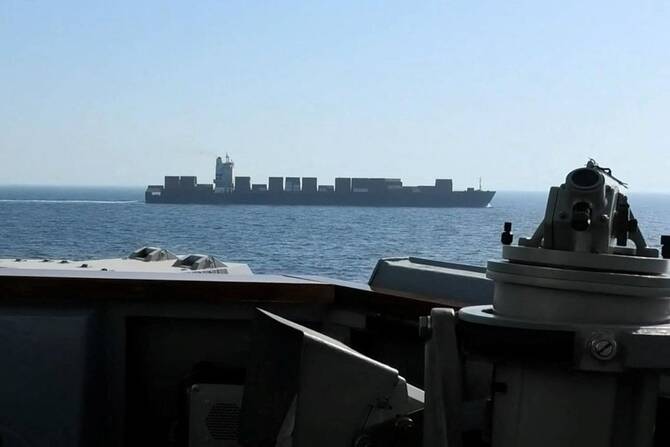
The price surge largely stems from Iran’s closure of the Strait of Hormuz. This strategic waterway serves as a major shipping route for oil exports from Gulf producers.
Because a large share of global oil shipments passes through the strait, any disruption immediately affects global supply. As a result, energy markets have tightened significantly.
Higher fuel costs also threaten to affect other parts of the economy. Rising oil prices often lead to increases in transport fares, food prices, and the cost of essential goods.
Under the Tax Reform for Acceleration and Inclusion Act, the government previously suspended fuel excise taxes automatically when Dubai crude prices reached $80 per barrel for three consecutive months. However, that provision expired in 2020.
As a result, the Marcos administration is now seeking new emergency authority from Congress to address the current crisis.
Meanwhile, lawmakers have proposed additional economic measures to help protect vulnerable sectors. Senator Risa Hontiveros has called for a ₱52.8 billion emergency supplemental budget.
Part of the proposal would establish a ₱38 billion emergency fund for overseas Filipino workers. The fund would support repatriation programs and reintegration assistance for workers affected by the crisis.
Government economists are also studying possible economic scenarios if the Middle East conflict continues.
Department of Economy, Planning and Development Undersecretary Rosemarie Edillon explained that officials are modeling two potential outcomes.
One scenario assumes oil prices stabilize near $100 per barrel if the conflict ends soon. The second scenario considers a prolonged closure of the Strait of Hormuz.
If the disruption continues, crude oil prices could climb as high as $140 per barrel.
Under that scenario, the Philippines fuel price hikes could worsen dramatically. Diesel prices could reach approximately ₱96 per litre, even before any tax relief measures take effect.
As global energy markets remain uncertain, Philippine authorities continue to monitor developments closely. Government officials say protecting consumers from profiteering while maintaining fuel supply stability remains their top priority.