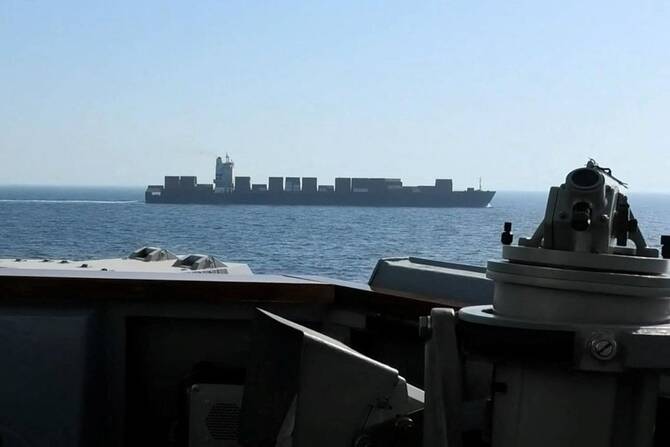
Major US allies, including Japan and several European nations, have declined a request from the Trump administration to contribute naval vessels to a new maritime security effort. The proposed initiative aimed to safeguard shipping through the strategic Strait of Hormuz, a critical waterway for global energy supplies. However, officials in Tokyo, Berlin, and Rome stated on Monday that they have no plans to join the proposed Strait of Hormuz coalition, citing constitutional restrictions and a preference for diplomatic engagement. The refusals come as the ongoing US-Israeli conflict with Iran enters its third week, severely disrupting tanker traffic.
The White House had hoped to assemble a multinational force to counter Iranian threats to close the passage, through which approximately one-fifth of the world’s oil passes. President Donald Trump argued that nations dependent on Gulf energy have a responsibility to secure the route. He indicated that Washington had approached seven countries, specifically naming China, France, Japan, South Korea, and Britain as desired partners. Yet, the immediate response from key allies has been one of clear reluctance, undermining the initial push for a unified naval front.
Japan Declines Due to Pacifist Constitution
Japanese Prime Minister Sanae Takaichi delivered the most definitive rejection during a parliamentary session. She confirmed that Tokyo has made no decision to dispatch escort ships and emphasized the constraints of the nation’s pacifist constitution. This legal framework strictly limits the Japanese Self-Defense Forces’ ability to participate in overseas military operations, particularly those not directly related to national defense. The prime minister’s statement effectively rules out Japan’s involvement in the proposed Strait of Hormuz coalition for the foreseeable future.
The Japanese position reflects a long-standing post-war policy of minimizing military entanglement in foreign conflicts. While Japan relies heavily on energy imports transiting the strait, the government appears to view direct naval participation as a step too far. Officials signaled they would instead explore alternative diplomatic channels to de-escalate the situation. This cautious approach highlights the delicate balance Tokyo must strike between its alliance with the US and its constitutional pacifism.
European Allies Express Reluctance
Across Europe, governments similarly distanced themselves from any new military commitment in the Gulf. In London, British Prime Minister Keir Starmer clarified that securing the strait would not become a NATO mission, suggesting the alliance would not be the vehicle for such an operation. Germany’s Defence Minister Boris Pistorius noted that expanding the existing EU naval mission, Aspides, to cover the Strait of Hormuz would require a new legal mandate from the German parliament, a process that would take considerable time.
Greece and Italy also confirmed they would not contribute to a new US-led effort. A Greek government spokesman stated Athens would restrict its participation to the existing EU mission in the Red Sea. Italian Foreign Minister Antonio Tajani emphasized that diplomacy, not military escalation, is the appropriate response to the crisis. This collective hesitation from major European powers suggests the proposed Strait of Hormuz coalition lacks the broad political support necessary for implementation, leaving the US to potentially pursue a more limited, unilateral approach.
Global Energy Markets on Edge
The diplomatic tensions are amplifying concerns in global energy markets. With the strait handling a massive volume of the world’s crude oil, the combination of military conflict and the failure to form a protective coalition has spooked traders. Shipping companies are increasingly reluctant to send vessels through the danger zone, leading to a sharp decline in traffic and a spike in insurance premiums for those that do. Industry analysts warn that a prolonged closure, even a partial one, could send oil prices soaring and disrupt supply chains worldwide.
The uncertainty is compounded by President Trump’s public pressure on other major economies, particularly China. In a recent interview, he suggested that Beijing, which relies heavily on imports through the strait, should contribute to security efforts. He even hinted at delaying a planned visit to China if support was not forthcoming. This linkage of diplomatic engagement to security cooperation adds another layer of complexity to an already volatile geopolitical landscape.
EU Explores Alternative Naval Options
In Brussels, EU foreign policy chief Kaja Kallas acknowledged the bloc’s interest in keeping the strait open. She suggested that expanding Operation Aspides, currently protecting vessels from Houthi attacks in the Red Sea, could be the fastest way to enhance maritime security. This proposal is now a topic of discussion among EU foreign ministers. However, diplomats caution that member states are unlikely to agree to an immediate expansion, as it would require new mandates and funding.
The Aspides mission currently operates three warships from France, Greece, and Italy. Extending its reach into the Gulf would represent a significant operational shift. While the EU recognizes its strategic interest in the free flow of energy, the political will to directly confront the risks in the Strait of Hormuz remains low. The coming days will determine whether Europe can forge a unified response, or if the responsibility for securing the waterway will fall back entirely on Washington, despite its calls for a broader Strait of Hormuz coalition.