Global Outcry as Dozens Die at Gaza Aid Centre Amid Israeli Fire
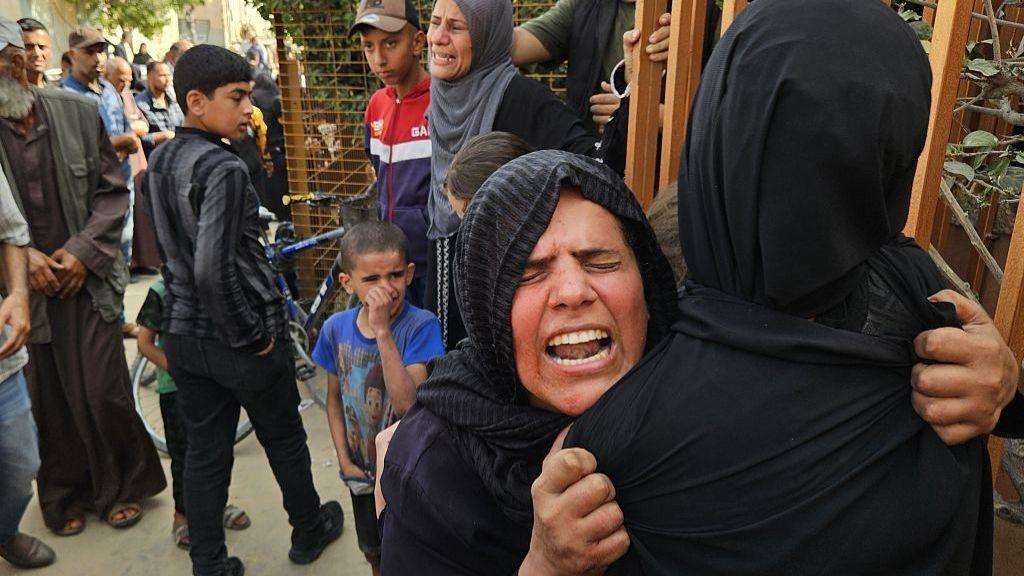
The international community is reacting with shock and condemnation after Israeli forces reportedly opened fire on Palestinians gathered at a newly established aid distribution site in southern Gaza early Tuesday. According to eyewitness accounts and medical teams, the scene was “total carnage,” as civilians desperate for food were gunned down while attempting to access lifesaving aid.
The Israeli military provided a contrasting narrative, claiming that “several suspects” deviated from assigned access paths and approached troops, prompting warning shots and then targeted fire. But for many observers, the deaths—believed to number in the dozens—underscore serious flaws in the controversial new aid system operating in Gaza.
This system is spearheaded by the Gaza Humanitarian Foundation (GHF), a U.S.-supported initiative set up to replace aid distribution previously managed by the United Nations and veteran international relief organizations. The GHF model uses private security contractors and operates only in southern Gaza, where Israel maintains total military control.
The foundation was launched after Israel imposed a complete blockade on aid, leaving over two million residents at imminent risk of famine. While Israeli officials accuse the UN of allowing Hamas to steal aid—allegations the UN denies—the GHF has not managed to earn the confidence of humanitarian experts.
Just last week, Jake Wood, head of GHF, resigned, citing an inability to uphold principles such as impartiality, neutrality, and humanitarian integrity. The UN, meanwhile, refuses to collaborate with GHF, pointing to a lack of oversight and transparency.
Unlike the UN’s extensive network of supply kitchens and aid hubs, the GHF system requires civilians to make treacherous journeys through rubble and conflict zones just to reach food distribution points. The process has been marred by poor organization, chaos, and violence. Younger, stronger individuals often seize boxes, leaving vulnerable people empty-handed.
In their desperation, many Gazans begin walking overnight to secure spots in long queues. These mass gatherings, fueled by hunger, become increasingly hard to control—and in this latest instance, deadly.
Prior to the shootings, UN High Commissioner for Human Rights Volker Türk condemned the GHF’s operation as showing “utter disregard for civilians.” He questioned how a population already starving and sick for months is now expected to scramble for aid under fire.
Critics argue that the aid centres are being used by Israel as tools of control. Even Israeli Defense Minister Yoav Gallant described the distribution system as a “lever” in the ongoing fight against Hamas.
Now, with scenes of hungry civilians being killed, pressure is mounting on Israel from close allies including the UK, France, and Canada. These countries are calling for major changes to the way aid is handled in Gaza and have hinted at possible sanctions or even diplomatic shifts, such as recognising a Palestinian state.
The Gaza aid centre killings have become a symbol of the deepening humanitarian tragedy—and of Israel’s growing isolation on the world stage.https://www.youtube.com/watch?v=D7HYMCpvhMY