Recent developments indicate that four Russian S-400 Transport Erector Launchers (TELs) are being repositioned, likely signaling a shift in Moscow’s military strategy. These TELs, vital components of Russia’s S-400 air defense system, are currently stationed at the Syrian port of Tartus. Unofficial sources suggest they are being prepared for loading onto a roll-on/roll-off (ro-ro) cargo ship, sparking speculation about their potential deployment in Ukraine or Libya.
Strategic Repositioning
Satellite imagery analyzed by intelligence sources confirms the presence of the TELs at Tartus. The decision to relocate these launchers from Khmeimim Air Base in southern Syria, a long-standing strategic location for Russia, marks a significant shift in regional military dynamics. The movement coincides with reduced Russian influence in parts of Syria following political upheavals, including the waning control of Bashar al-Assad’s regime.
Reports highlight that four of the six S-400 TELs delivered to Syria years ago are now being readied for transport. The relocation underscores Moscow’s need to adapt its strategic assets to meet new political and military challenges in the region.
Tartus: A Pivotal Naval Base
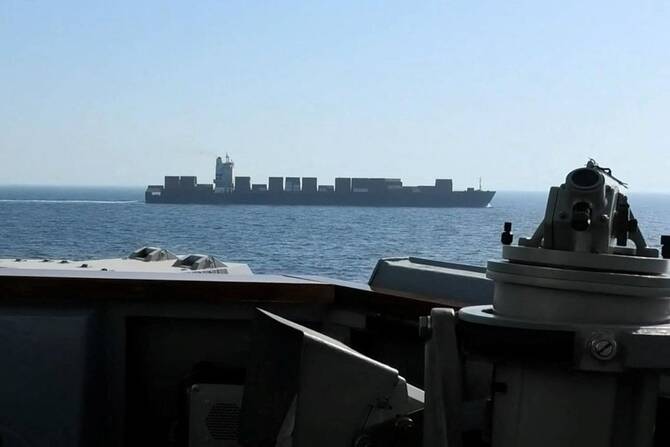
The port of Tartus, Russia’s key naval base in the Mediterranean, remains central to Moscow’s military operations. While the base supports ongoing activities in Syria, it also positions Russia to influence broader conflicts. The presence of a ro-ro cargo ship near the port suggests imminent transportation of the TELs, although it awaits clearance from Syria’s leadership to dock and load.
Military analysts are divided over the TELs’ next destination. Some argue that they are destined for the Ukrainian front, where they could bolster Russia’s air defense capabilities and secure key territories. Others speculate that the equipment might be sent to Libya to strengthen Russian-backed forces in the escalating conflict.
The Role of the S-400 System in Geopolitical Strategy
The S-400 Triumf is one of the most advanced air defense systems globally, capable of engaging a wide range of aerial threats, including aircraft, cruise missiles, and ballistic missiles. The TEL, a critical component of the S-400 system, ensures the system’s mobility, rapid deployment, and operational readiness.
Each TEL unit is mounted on a heavy-duty military truck chassis, such as the MAZ-543M or BAZ-64022, allowing it to traverse diverse terrains. It typically carries four missile canisters and can launch various missile types, including the 48N6 and 40N6, offering engagement ranges of up to 400 kilometers.
Once at a launch site, the TEL swiftly transitions from transport to launch mode, raising its canisters to a near-vertical position. Its integration with advanced communication and control systems enables seamless coordination with radar units and command posts, ensuring rapid response to threats.
Deployment Implications
If redeployed to Ukraine, the TELs would enhance Russia’s air defense network, potentially altering the balance of power in the conflict. These systems would likely protect critical infrastructure and bolster Moscow’s ability to maintain air sovereignty in contested areas.

Alternatively, deployment to Libya could extend Russia’s strategic reach in the region. Supporting General Khalifa Haftar’s forces, the TELs could tip the scales in favor of Russian-backed groups, increasing Moscow’s influence in the ongoing conflict.
Geopolitical Ramifications
The repositioning of the S-400 TELs highlights Russia’s readiness to adapt its military assets to shifting geopolitical landscapes. This move not only underscores the flexibility of the S-400 system but also reflects Moscow’s strategic calculations in addressing challenges beyond Syria.
As these TELs await redeployment, their next destination will shape Russia’s involvement in either the escalating war in Ukraine or the intensifying conflict in Libya. This development marks a crucial moment in Moscow’s broader efforts to consolidate its influence on the global stage.
Disclaimer: This article is based on publicly available information and intelligence sources. It reflects ongoing developments and analyses, which are subject to change.