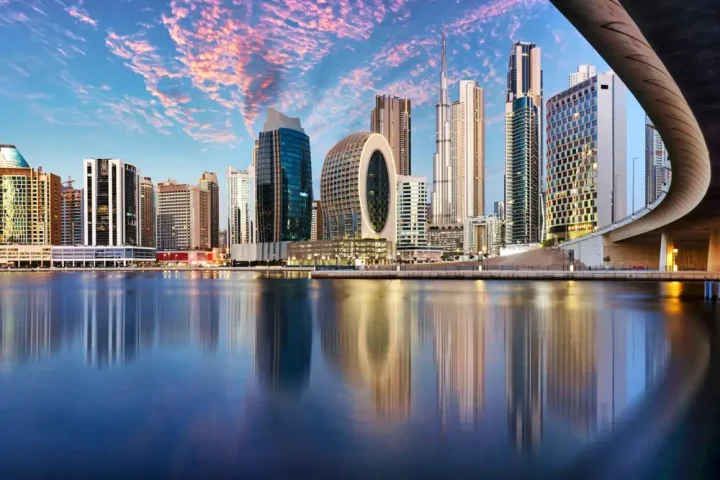
Long before sunrise settles over the towers of Downtown Dubai, the city is already awake.
Delivery trucks move through industrial corridors. Metro stations begin filling with commuters. Giant digital screens flicker back to life above Sheikh Zayed Road, illuminating highways with luxury campaigns, financial advertisements and streaming visuals designed to capture attention in seconds. Across malls, transit routes and dense commercial districts, outdoor advertising has become inseparable from the visual identity of the modern Gulf city.
In Dubai, advertising is not merely marketing. It is infrastructure.
But now, amid mounting conversations about climate responsibility, sustainable development and ESG-focused business strategies, the advertising industry itself is beginning to confront a question that once seemed distant from its priorities:
Can commercial visibility coexist with environmental responsibility?
EDS FZCO, the Dubai-based company behind OutdoorAdvertisingUAE.com, believes the answer is yes. The newly launched platform is now live at:
Green Advertising in Dubai & UAE
In May 2026, the company formally launched its “Green Advertising” initiative across Dubai and the wider UAE, introducing a sustainability-focused outdoor advertising platform that blends eco-conscious branding, recycling engagement systems, digital interaction and smart-city integration into a single media concept.
The initiative marks a notable shift in how outdoor advertising is being positioned within rapidly evolving urban environments.
Traditionally, the out-of-home advertising industry focused on reach, frequency and visibility. Success was measured through traffic counts, impressions and the strategic placement of campaigns in highly populated areas. Billboards competed for attention through size, brightness and scale.
Green Advertising proposes something different.
Rather than functioning solely as passive displays, the campaigns are designed to create interaction between brands, public spaces and environmental awareness initiatives. According to EDS, the platform integrates smart recycling engagement systems, interactive digital media, consumer reward participation and sustainability-focused branding experiences intended to encourage more active public involvement.
In essence, the company is attempting to reposition outdoor advertising from a one-directional commercial message into a participatory urban experience.
The concept arrives during a period of rapid environmental and technological transformation across the UAE.
Over the last decade, the Emirates has increasingly aligned national development with sustainability targets, renewable energy investments and smart-city infrastructure. Dubai and Abu Dhabi have both launched major initiatives centered around green mobility, environmental innovation, circular economy planning and digitally connected public systems.
These efforts are not occurring in isolation. Across global cities, governments and corporations are under growing pressure to demonstrate measurable commitments to sustainability and environmental accountability.
That pressure has reached the advertising industry as well.
Brands today are expected to communicate more than products. Increasingly, they are judged by how they participate in wider social and environmental conversations. ESG frameworks — once limited largely to investor reports and corporate strategy meetings — now influence marketing campaigns, public relations and consumer perception.
Green Advertising appears to emerge directly from that changing landscape.
EDS says the initiative is designed to help businesses and government organizations create environmentally conscious campaigns while still maintaining high-impact brand visibility in some of the UAE’s busiest urban locations.
The planned deployment areas stretch across shopping malls, metro and transit systems, business districts, residential communities, educational institutions, exhibitions, events and other high-footfall public spaces throughout Dubai and the broader UAE.
The choice of location is central to the project’s strategy.
Unlike digital advertising hidden behind personalized algorithms on phones and laptops, outdoor media exists in collective public space. Millions encounter it simultaneously while commuting, shopping, attending events or simply moving through the city.
That visibility gives outdoor advertising unusual cultural influence.
In Dubai especially — a city deeply shaped by architecture, spectacle and technological display — public advertising often becomes part of the urban atmosphere itself. Massive LED screens, branded transit systems and digitally animated facades already define much of the visual experience of the city.
Green Advertising attempts to insert sustainability into that landscape.
The initiative’s model combines environmental messaging with audience participation systems intended to encourage recycling behavior and public engagement. EDS describes the platform as a bridge between advertising, technology and sustainability — one designed to help brands strengthen public perception while contributing to broader environmental awareness goals.
Industries expected to engage with the initiative include FMCG companies, retail brands, real estate developers, telecommunications firms, banks, hospitality groups, healthcare organizations and government-linked entities.
The appeal for many of these industries lies in the growing importance of ESG positioning.
Around the world, corporations increasingly seek ways to align themselves with sustainability-driven consumer expectations. Environmental responsibility has become not only a policy discussion, but also a branding strategy and reputational consideration.
Consumers, particularly younger urban populations, increasingly expect companies to demonstrate awareness of environmental issues and civic responsibility in visible ways.
As a result, advertising itself is changing.
Campaigns are no longer judged solely on creativity or visibility. They are also evaluated by the values they appear to promote and the public conversations they contribute to shaping.
According to EDS, Green Advertising campaigns are intended to generate stronger emotional connections with audiences by linking commercial messaging to sustainability and public participation.
The company says the initiative offers advertisers opportunities for ESG-focused campaign positioning, interactive audience engagement, smart-city integration and increased corporate social responsibility visibility.
“Green Advertising represents the future of outdoor media,” said Manish Gupta, Chief Executive Officer of EDS.
“Today’s audiences expect brands to contribute positively to society and the environment. Through this initiative, we are helping businesses create impactful campaigns that not only increase visibility but also support sustainability and public engagement.”
The launch also reflects the continuing expansion of the UAE’s out-of-home advertising industry, which has grown alongside the country’s rapid urbanization and economic diversification.
Since 2006, OutdoorAdvertisingUAE.com — operated by EDS FZCO — has provided outdoor advertising services across Dubai, Abu Dhabi, Sharjah and the wider GCC region. The company specializes in billboards, transit advertising, DOOH campaigns, taxi branding, mall media, lamppost campaigns and metro advertising solutions.
Over the years, the Gulf’s advertising landscape has evolved into one of the world’s most technologically advanced outdoor media markets, driven by smart infrastructure, dense urban development and a highly connected population.
But Green Advertising suggests the next stage of that evolution may not be defined solely by technology or scale.
Instead, it may be shaped by how advertising integrates itself into the broader ambitions of modern cities — cities increasingly concerned not only with commerce and visibility, but also with sustainability, participation and public responsibility.
In Dubai, where the future is often constructed in plain sight, even advertising is beginning to reflect that transformation.
The billboard, once simply a symbol of consumption, is slowly being reimagined as part of something larger:
a conversation about how cities communicate with the people moving through them every day.
Read Also: Top 25 Mobile Network Operators Worldwide by Subscriber Numbers