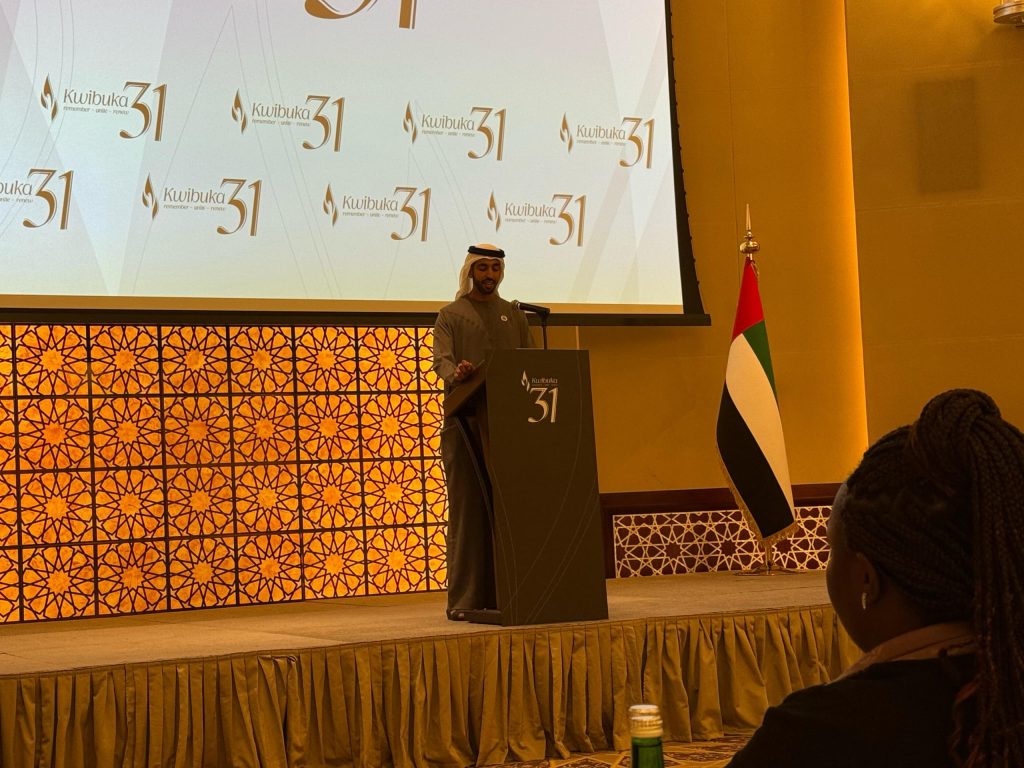
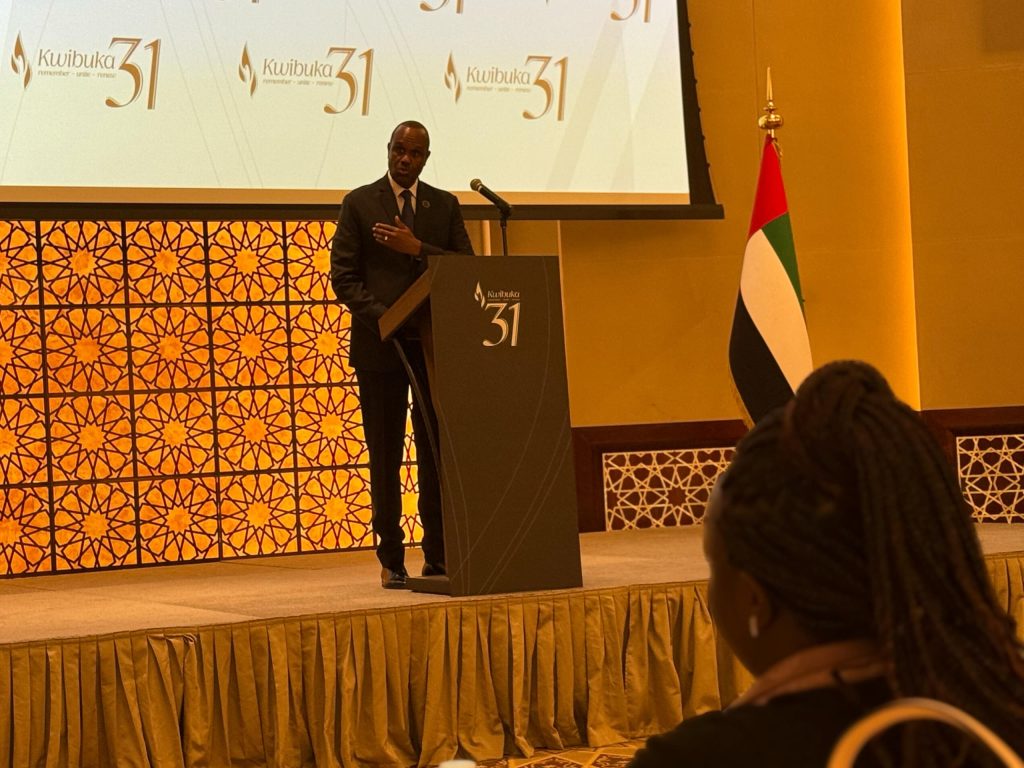
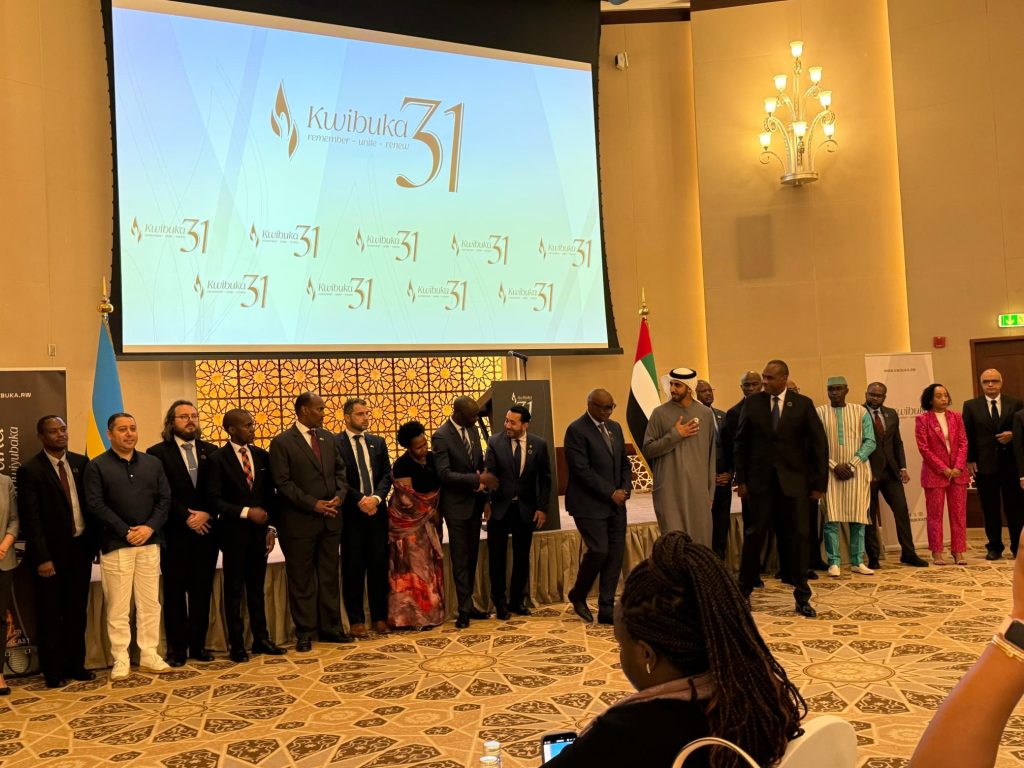
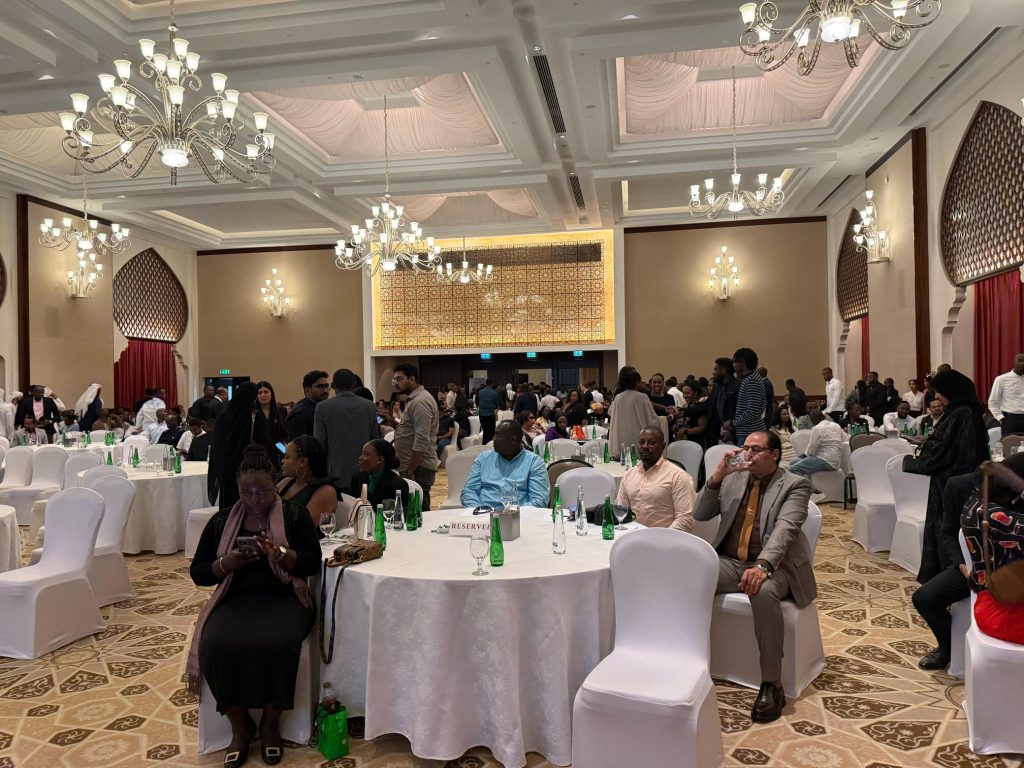
As the sun bathed the majestic Bab Al Qasr Hotel in golden light on the morning of April 7th, 2025, a solemn stillness took hold. Beneath the glittering skyline of Abu Dhabi, hearts beat in unison with Rwanda, echoing the cries of a nation that once fell to the depths of human cruelty—and rose again with unmatched resilience.
This is Kwibuka31. A sacred moment. A generational milestone. A collective promise—never again.
More than a ceremony, Kwibuka31 is a deeply moving reflection on the 1994 Genocide against the Tutsi—a hundred harrowing days during which over one million lives were extinguished, with a staggering 100,000 massacred daily. In a powerful act of global solidarity, the 31st commemoration drew a distinguished gathering of ambassadors, diplomats, government officials, human rights advocates, and faith leaders from every corner of the world, all convening in the heart of the United Arab Emirates to honor the past and shape a more just future.
A World United in Grief—and Resolve
The atmosphere at Bab Al Qasr was one of reverent silence, interrupted only by whispered prayers and the quiet crackle of the Flame of Remembrance being lit. In that moment, it wasn’t just Rwanda mourning—it was the world. Flags from across continents stood beside the Rwandan flag, and over 40 nations were represented through their diplomatic corps, standing shoulder-to-shoulder with survivors, Rwandan nationals, and friends of Rwanda.
Draped in dignity, the gathering was a vivid testament to how far Rwanda has come, and how deeply the world acknowledges and supports its extraordinary journey of healing and hope.
“Kwibuka” – A Call to Remember
Kwibuka, which means “to remember” in Kinyarwanda, is more than commemoration. It is an act of defiance against forgetting. Against denial. Against silence. It’s a bold assertion that truth matters. That the pain endured must never be erased, and the victims must never fade into the shadows of history.
Rwandan Ambassador to the UAE, in a stirring address, spoke not only of the sorrow that still lingers—but of the light that has emerged from the darkness. “Today, we do not gather in defeat, but in defiance,” she declared. “We remember because it is in memory that we reclaim dignity, and in truth that we rebuild our humanity.”
Honoring the Survivors, Empowering the Next Generation
For survivors, Kwibuka is a period of mourning that never truly ends. But in this grief lies astonishing strength. Their stories, their voices, and their courage formed the heartbeat of the event. As survivors shared testimonies, many in the audience were visibly moved to tears—diplomats wiping their eyes, youth bowing their heads in solemn respect.
It was a profound reminder that the trauma of genocide does not vanish—but through solidarity and storytelling, healing begins.
And yet, Kwibuka31 is not just for those who lived through the genocide—it is especially for those who did not. The youth of Rwanda and the world are entrusted with memory, with education, with action. The ceremony called on every young person to rise as ambassadors of peace and unity, to study the past, challenge denial, and build a future grounded in compassion and justice.
From Bisesero to Bab Al Qasr: The Spirit of Resistance Lives On
One of the most powerful elements of the ceremony was the honoring of Bisesero, the site of fierce resistance during the genocide. More than 60,000 victims lie at rest in Bisesero, a place that today stands as a UNESCO World Heritage Site and a symbol of Rwanda’s indomitable spirit.
As the story of the Abasesero—men, women, and even children who resisted the killers with stones, sticks, and raw courage—was recounted, the room fell into a deeper silence. That story, though rooted in tragedy, inspired awe. Their fight, their resistance, and their sacrifices now echo in every step Rwanda takes toward peace.
Unite: When the World Says ‘Never Again’—and Means It
Kwibuka31 in Abu Dhabi proved that genocide is not only a Rwandan issue—it is a human issue. A betrayal of our shared values. And therefore, its remembrance requires global unity.
Through unity, Rwanda has achieved what many thought impossible: reconciliation between neighbors who once turned against each other, economic transformation, and global respect. Through Umuganda, communities continue to come together to rebuild—brick by brick, heart by heart. Through Walks to Remember, youth globally pledge to stand against prejudice and violence.
In Abu Dhabi, this spirit of togetherness was palpable. Attendees pledged support for truth, for justice, and for the survivors. They pledged to challenge hate wherever it exists—whether in conflict zones, schools, parliaments, or online platforms.
Renew: The Torch Passes On
The next 30 years of Rwanda’s journey will not be written by its past—but by its youth, its visionaries, and its people, at home and abroad. Kwibuka31 is a torch being passed—a flame that lights the path forward.
And it doesn’t stop in Kigali or Abu Dhabi. Whether it’s planting trees in New York, hosting dialogues in Nairobi, or building community centers in Dubai, Kwibuka reminds us that remembrance is action. That healing demands effort. That justice requires vigilance.
A Closing Message to the World
As the event concluded, a unified chorus of voices declared: “Never Again. Not in Rwanda. Not anywhere.” The message resounded like a prayer and a warning, a hope and a command.
In a world still grappling with war, hate, and displacement, Kwibuka31 is a beacon—reminding us that humanity’s darkest moments can give birth to its brightest lights.
We remember not to dwell in pain, but to uplift the truth.
We unite not out of convenience, but out of conviction.
We renew not because we must—but because we believe in a better world.
To join the global movement of remembrance and action, visit:
Let us remember. Let us unite. Let us renew. Together.