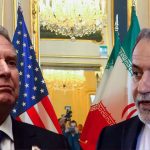
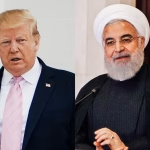
Trump Confirms High-Stakes Nuclear Talks With Iran Set for April 12
President Donald Trump has revealed that the United States will hold direct nuclear talks with Iran this Saturday in Oman, in what could mark a pivotal moment in global nuclear diplomacy.
Speaking alongside Israeli Prime Minister Benjamin Netanyahu at the White House, Trump said the talks would take place at a “very high level” and warned that failure to reach an agreement would make it a “very bad day for Iran.”
Iran’s Foreign Minister Abbas Araqchi also confirmed the meeting, though he clarified it would be indirect. “It is as much an opportunity as it is a test,” he posted on X. “The ball is in America’s court.”
The announcement follows years of rising tensions after Trump withdrew from the 2015 nuclear deal during his first presidency, calling it deeply flawed. Since then, Iran has steadily breached key commitments under the agreement, including stockpiling enriched uranium—fuel that can potentially be used in nuclear weapons.
A Last-Ditch Effort?
Trump has previously raised the threat of military action if Iran fails to agree to new limits on its nuclear program. Last month, he sent a letter to Iran’s Supreme Leader via UAE intermediaries, offering a chance to negotiate. Though initially rebuffed, Iran later signaled willingness to engage through a third party.
Now, both nations are poised for rare engagement amid worsening regional instability and international pressure to avoid escalation.
Israel’s Red Line
Netanyahu backed the initiative—cautiously. “If a deal can be done diplomatically in a full way, the way it was done in Libya, that would be a good thing,” he said. Still, Israel maintains a hard line, with reports suggesting it is prepared to strike Iranian nuclear facilities if diplomacy fails.
Iran, meanwhile, insists its nuclear sites are for civilian energy use, but international watchdogs such as the IAEA remain alarmed by the country’s uranium enrichment progress.
What’s at Stake?
A new deal could lead to sanctions relief for Iran’s crippled economy, while ensuring international oversight of its nuclear program. But trust remains low, especially after the collapse of the original Joint Comprehensive Plan of Action (JCPOA), signed by the US, China, Russia, the UK, France, and Germany in 2015.
With talks set for April 12, all eyes are on Oman, a frequent host for behind-the-scenes diplomatic engagements.
Should the talks succeed, they may reduce nuclear tension in the Middle East. If they fail, the risk of military confrontation and regional destabilization could escalate dramatically.