DUBAI, UAE — Gulf Arab countries are growing increasingly anxious over the possibility of a nuclear contamination crisis or Iranian retaliation, as the prospect of U.S. or Israeli strikes on Iran’s nuclear facilities looms large.
Emergency Preparations Underway
In Oman, citizens have begun circulating emergency response guidelines through messaging apps, advising residents to seal indoor spaces and shut down ventilation systems in the event of a nuclear incident.
In Bahrain, the government has prepared 33 emergency shelters and conducted nationwide siren tests. Media outlets across the region have published guides on how to handle radiation exposure, underscoring the rising concern.
“Primarily there is fear of environmental contamination, especially in shared waters,” said Elham Fakhro, a Bahraini resident and Middle East scholar at Harvard Kennedy School.
Shared Waters, Shared Risk
The concern centers around Iran’s Bushehr nuclear power plant, which lies closer to Gulf capitals than it does to Tehran. A strike on the plant could send radioactive material into the Persian Gulf, threatening marine ecosystems and contaminating desalinated water, the primary drinking source for nearly 60 million people in the Gulf.
“The water we use for our people is from desalination … We don’t have rivers or reserves. The country would run out of water in three days,” Qatari Prime Minister Mohammed Al Thani said during an earlier interview.
Regional Coordination Escalates
The Gulf Cooperation Council (GCC) — comprising Bahrain, Kuwait, Oman, Qatar, Saudi Arabia, and the UAE — has activated its Kuwait-based Emergency Management Centre, focusing on radiological and environmental safeguards.
Meanwhile, UAE Foreign Minister Sheikh Abdullah bin Zayed and a Qatari foreign ministry spokesperson have both issued stern warnings against “reckless and miscalculated actions” that could extend beyond Iran and Israel’s borders.
Fears of Military Retaliation
Beyond environmental risks, there’s growing anxiety about potential Iranian reprisals against U.S. military installations in the region — such as Bahrain’s Naval Forces Central Command — should the U.S. participate in a strike.
Despite diplomatic warming with Arab states, Iran has issued implicit threats to target U.S. interests in the Gulf if attacked.
Trump’s Changing Tone
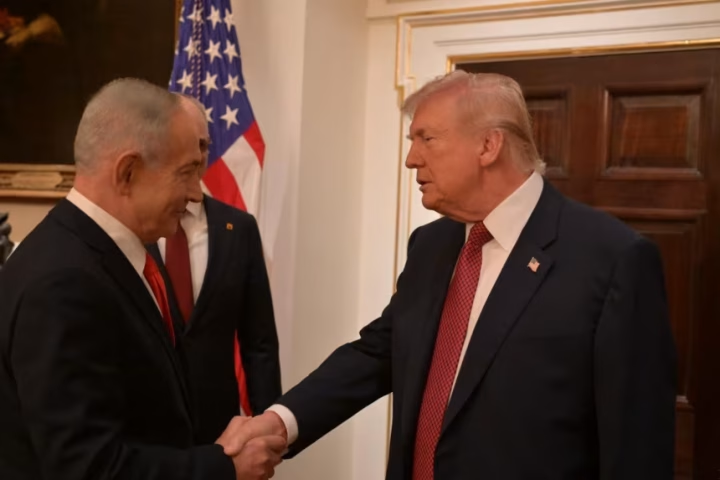
U.S. President Donald Trump appears to be inching closer to authorizing military action, according to senior officials who spoke to CNN. While Trump maintains that diplomacy is still an option, he remarked cryptically:
“I may do it, I may not do it. I mean, nobody knows what I’m going to do.”
This ambiguity has heightened tensions across the Gulf, even as residents try to remain calm.
Public Sentiment: Mixed but Tense
While some expats and residents in the UAE and Kuwait say they trust local authorities and feel safe, others admit to growing unease.
“Everyone is stressed out … and it’s becoming very real,” said an Egyptian woman in Dubai. “The situation is not something to be taken lightly and war feels nearby.”
Another American resident in Abu Dhabi echoed a similar sentiment:
“I have unwavering trust in my safety here. But if the U.S. strikes Iran, I’d feel worried — because of the uncertainty about what happens next.”
A Region on Edge
With preparations accelerating and diplomatic rhetoric intensifying, the Gulf stands on edge, balancing between confidence in emergency protocols and fear of a wider regional conflagration that could alter life in the Gulf — and the Middle East — for years to come.
Read: World Reacts to Israeli Attacks on Damascus, Waldorf Astoria New York Returns with Restored Legacy