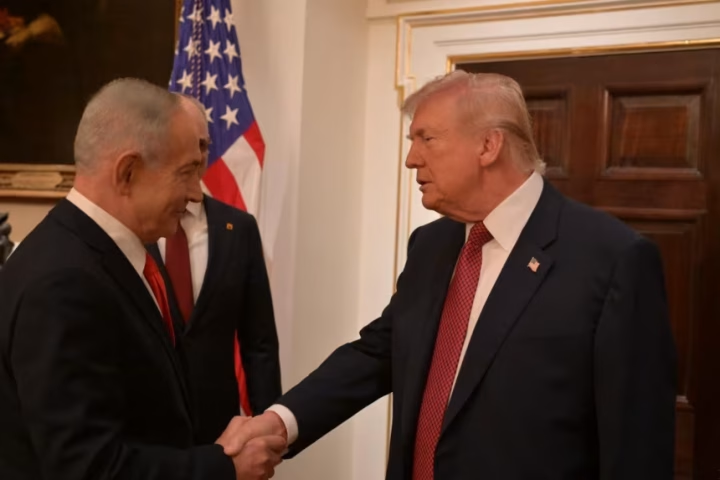
Israeli Prime Minister Benjamin Netanyahu is set to meet with U.S. President Donald Trump this week to discuss a range of issues, with a particular focus on Iran’s nuclear ambitions. The meeting, scheduled in Washington, is expected to be a pivotal moment in the ongoing discussions between the U.S. and Iran, as both nations continue to navigate the complexities of a potential nuclear agreement.
Israel has consistently expressed skepticism about the effectiveness of the ongoing negotiations between Washington and Tehran. As discussions between the two countries progress, Israel’s primary concern remains ensuring its security interests are protected and maintaining its freedom to act militarily should the negotiations fail or result in a deal that does not address the full scope of Iran’s capabilities.
Netanyahu’s talks with Trump are expected to center on Iran’s growing ballistic missile program and its potential to reconstitute its missile stockpiles to pre-2015 levels. Israel’s intelligence agencies have raised alarms over Iran’s rapid progress in this area, estimating that Tehran could potentially possess between 1,800 to 2,000 ballistic missiles within a matter of weeks or months if action is not taken to curb their development.
The Israeli government is concerned that Iran’s missile capabilities, if left unchecked, could alter the regional balance of power and pose a direct threat to Israel’s security. Netanyahu is reportedly planning to present new intelligence to Trump, highlighting the urgency of the situation and pressing for stronger measures to ensure that Iran is held accountable for its actions.
Israel’s Approach to the Iran Nuclear Talks
Before departing for Washington, Netanyahu emphasized that discussions surrounding Iran would be the top priority during his visit. While the Israeli Prime Minister acknowledges that the broader Middle East issues, such as the situation in Gaza, are also critical, he insists that Iran’s nuclear program must take precedence in any diplomatic discussions.
The Israeli government has long been critical of the nuclear deal negotiated between Iran and world powers in 2015, the Joint Comprehensive Plan of Action (JCPOA), signed during the Obama administration. Netanyahu, who vehemently opposed the deal at the time, has repeatedly voiced concerns that it left Iran with the ability to pursue nuclear weapons once the agreement’s restrictions expired. His biggest fear is that any new deal with Iran could echo the terms of the JCPOA, lifting uranium enrichment limits while leaving Iran’s military capabilities intact.
Netanyahu’s position has been that a narrow nuclear deal that only limits Iran’s enrichment activities could leave Israel vulnerable. He believes that the U.S. and its allies must demand broader concessions from Iran, including the dismantling of Iran’s missile program and the cessation of its support for regional proxy groups. These demands mirror earlier U.S. objectives under the Trump administration, but Iran has shown little interest in discussing anything beyond its nuclear activities.
Despite these ongoing negotiations, Israel remains wary of the outcome, with Netanyahu and his security advisors pushing for a more comprehensive agreement that would effectively neutralize Iran’s military capabilities. Israel’s national security hinges on preventing Iran from developing nuclear weapons or expanding its missile program, and Netanyahu is expected to stress the importance of ensuring these issues are adequately addressed in any final agreement.
Trump’s Position on Iran
For his part, President Trump has signaled a willingness to strike a deal with Iran, but he has made it clear that his primary goal is to prevent Iran from acquiring nuclear weapons. While Trump has indicated he would accept an agreement that focuses solely on nuclear restrictions, Israel’s leadership is concerned that such a deal would be insufficient, particularly if it leaves Iran’s broader military capabilities unaddressed.
In the lead-up to his meeting with Netanyahu, Trump suggested that a deal limiting Iran’s nuclear activities could be acceptable, but he emphasized that the one non-negotiable issue is that Iran must not be allowed to develop nuclear weapons. This position reflects Trump’s broader approach to dealing with Iran, which has centered on the prevention of nuclear weaponization rather than addressing Iran’s regional military activities or missile development.
However, Netanyahu’s government fears that any agreement that fails to address these broader concerns could leave Israel vulnerable to future threats from Iran. Netanyahu’s visit to Washington comes at a critical time, as both nations face the potential for a limited nuclear deal that could fall short of Israel’s security needs.
Israel’s Military Posture and Preparedness
In addition to presenting intelligence on Iran’s missile program, Netanyahu is likely to discuss Israel’s military posture with Trump, particularly in light of the potential collapse of U.S.-Iran talks. If diplomatic efforts falter, Israel is prepared to act unilaterally to prevent Iran from acquiring nuclear weapons or enhancing its missile capabilities.
Israel has repeatedly shown its willingness to take military action to protect its security interests, as evidenced by its surprise attack on Iran’s nuclear and military facilities in June. That attack, which effectively derailed ongoing negotiations, marked a significant escalation in Israel’s efforts to curb Iran’s nuclear ambitions.
Despite the growing military tensions, Netanyahu’s government has made it clear that it would prefer to avoid direct conflict with Iran, but it is prepared to act if necessary. The Israeli Defense Forces (IDF) continue to prepare for potential military engagements with Iran, including coordinated strikes aimed at neutralizing Iran’s nuclear and missile infrastructure.
Israel’s Strategy in the Face of Diplomatic Challenges
As Netanyahu and Trump prepare for their meeting, Israel’s strategy remains focused on ensuring that any agreement with Iran is as comprehensive as possible, addressing not only nuclear restrictions but also Iran’s missile capabilities and regional military activities. The Israeli leadership understands that achieving these goals will require continued diplomatic pressure on the U.S. and its allies, as well as a willingness to take military action if diplomatic efforts fail.
With the ongoing uncertainty surrounding the U.S.-Iran negotiations, Netanyahu’s meeting with Trump could prove to be a turning point in the broader Middle East geopolitical landscape. While Israel remains hopeful that diplomacy will prevail, it is clear that the country is prepared for all contingencies should Iran’s nuclear ambitions go unchecked.