Winter has opened a devastating new front in Gaza’s prolonged conflict. Torrential rains, flooding, and bitter cold now batter hundreds of thousands of displaced Palestinians. This Gaza winter compounds the suffering from over two years of Israeli bombardment. Many residents are malnourished and lack the body fat to withstand the cold. Families stay awake through the night, gripping tents against strong winds and floodwaters. At least nine infants have recently died from hypothermia. These deaths occur amid reported Israeli restrictions on critical aid deliveries. Consequently, the season has become a battle for survival against the elements.
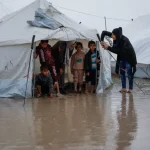
The scale of displacement exacerbates the crisis. Over ninety percent of Gaza’s population has been forced from their homes. Most now live in makeshift tents or bombed-out structures. The UN reports nearly eighty-one percent of all buildings are damaged. Strong winds and heavy rain since November have submerged or destroyed most displacement tents. Storm Byron in December damaged over forty-two thousand tents alone. It affected at least two hundred thirty-five thousand people. This Gaza winter leaves parents carrying children for hours to protect them from drowning in floodwaters. The cold is as deadly as the ongoing threat of airstrikes.
Life Inside the Flooded Camps
Maysa Yousef, a mother of four in central Gaza, describes the relentless struggle. “When it rains, of course all the tents flood, and all their bedding is soaked,” she told Arab News. People spend entire nights fighting for their lives. Civil Defense and rescue crews rush to save people from the water. They move families to schools or other locations deemed safer. However, Yousef states a grim reality: “In reality, there are no safe places because all of Gaza is destroyed.” Even aid workers are not spared. Her husband works at a field hospital where staff live in tents. They spend nights pushing water out with brooms and go to work in soaked clothes.
The destruction of infrastructure turns rain into a catastrophic event. With the sewage system ruined, floodwater has nowhere to drain. Large, deep pools form, completely submerging tents. Yousef describes surreal scenes of donkey carts transporting people through deep water. “The water would be covering the donkey itself, with only its head visible,” she said. Mornings bring a grim routine of spreading wet mattresses and belongings in the sun. However, the sun often does not appear. Coastal flooding worsens the situation, with the sea overflowing and pulling tents from higher ground. Soil erosion causes the ground to give way, sometimes sweeping children into the sea.
Preventable Deaths and Aid Blockades
The human cost is measured in young lives lost. On December 31st, rescuers pulled the lifeless body of seven-year-old Ata Mai from muddy waters. He drowned on December 27th in a displacement camp. He was the sixth child killed by inadequate shelter in December, according to UNICEF. The cold has proven even deadlier than drowning. At least eight newborns died of hypothermia within one month. More than seventy-four children have died in 2025 due to brutal winter conditions, UNRWA reports. Aid agencies call these deaths preventable. They blame severe Israeli restrictions on aid entry for blocking the delivery of life-saving supplies.
While a fragile ceasefire has allowed some aid to re-enter, it falls far short of needs. The UN states over one million people still urgently require shelter support. The situation worsened in December when Israel suspended permits for thirty-seven aid agencies. UN Human Rights Chief Volker Turk called the move “outrageous.” He reminded Israel of its obligation under international law to ensure essential supplies. Israel said the targeted NGOs, including Doctors Without Borders, missed a deadline to disclose staff information. The agencies deny knowingly employing anyone engaged in military activity. This bureaucratic conflict directly impacts survival in the Gaza winter.
The Collapse of Basic Sanitation and Health
Life for those in damaged buildings is scarcely better. Yousef describes her bomb-damaged house. Windows blast loose from their frames during shelling. Doors swing open with every strike. “The walls are pulling apart; they are at risk of collapse,” she says. Rain leaks through cracked walls as if residents are sitting in the street. Personal hygiene has become an excruciating ordeal. Water is extremely cold and fetched from far away. Wet conditions make firewood useless for heating bathwater. People are forced to bathe in icy water, leading to illness and severe bone pain. Soap has been scarce for months, leading some to improvise with oil.
The public health consequences are severe. Rainwater mixes with raw sewage due to shattered sanitation systems. This exposes residents to waterborne diseases. Save the Children warns of outbreaks of hepatitis, diarrhea, and gastroenteritis. Widespread malnutrition makes these illnesses more lethal. Ahmad Alhendawi, the organization’s regional director, notes basic shelter items are stuck at the border. “The denial of humanitarian aid is a serious violation of humanitarian laws,” he stated on January 8th. The Gaza winter is not just a climate event; it is a multiplier of humanitarian suffering engineered by war and blockade.
The international response has been insufficient to meet the monumental need. Calls for increased aid access and a political solution grow louder. However, they compete with the geopolitical complexities of the broader conflict. For displaced families, the immediate concern is the next rainstorm and the next cold night. Their resilience is pushed beyond breaking point by this dual assault of war and weather. The Gaza winter starkly illustrates how conflict extends beyond bullets and bombs. It weaponizes the environment and basic human needs against a civilian population.