US President Donald Trump has announced the formation of a new Gaza “Board of Peace”, naming former British Prime Minister Tony Blair and Trump’s son-in-law Jared Kushner as key members. The move has sparked immediate controversy, with critics questioning the legitimacy, neutrality, and intentions of a US-led body tasked withoverseeing Gaza’s future in the aftermath of Israel’s devastating war on the territory.
According to the White House, the Board of Peace will oversee President Trump’s 20-point plan aimed at ending Israel’s military campaign in Gaza and transitioning the enclave toward what the administration describes as “stabilisation, demilitarisation, technocratic governance, and reconstruction”. The war has killed more than 71,000 Palestinians since October 2023 and left much of Gaza in ruins.
Composition of the Gaza Board of Peace
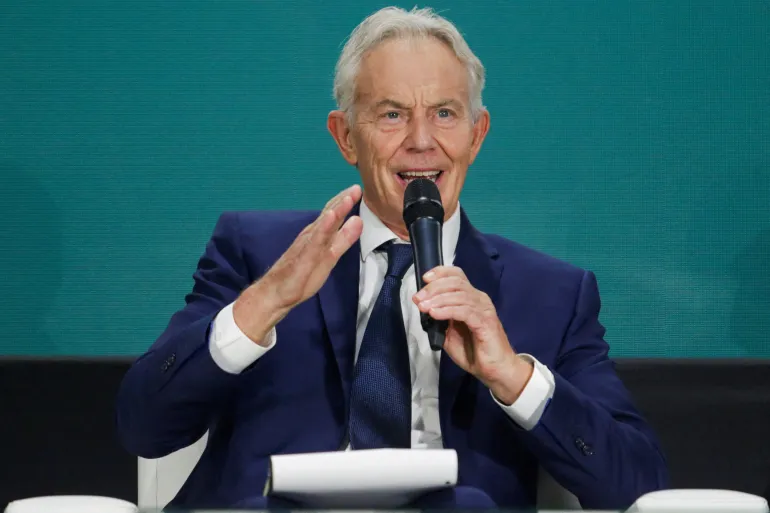
The White House said Blair will serve as a founding executive member of the board, alongside Kushner, US Secretary of State Marco Rubio, and Trump’s special envoy to the Middle East Steve Witkoff.
Other members include Marc Rowan, chief executive of Apollo Global Management; World Bank Group President Ajay Banga; and US deputy national security adviser Robert Gabriel. The board’s mandate includes governance capacity-building, reconstruction planning, investment mobilisation, regional diplomacy, and large-scale funding coordination.
Former United Nations envoy Nickolay Mladenov has been appointed High Representative for Gaza, a role intended to provide an international and multilateral dimension to the initiative.
Parallel Governance Structures for Gaza
Alongside the Board of Peace, the White House unveiled a Gaza Executive Board that will focus on day-to-day governance and service delivery. Blair, Kushner, and Witkoff will also sit on this body, joined by Turkish Foreign Minister Hakan Fidan and Qatari diplomat Ali Al Thawadi.
The executive structure will support the Office of the High Representative and a newly formed National Committee for the Administration of Gaza (NCAG), led by Ali Shaath, a former Palestinian Authority deputy minister originally from Gaza. The committee is expected to assume administrative responsibilities in the enclave in place of Hamas, which has indicated a willingness to relinquish governance under certain conditions.
Security and International Stabilisation Force
As part of the broader plan, the US administration also named Major-General Jasper Jeffers as commander of an International Stabilisation Force for Gaza. The force would be responsible for security operations, humanitarian aid delivery, and supporting what Washington calls “comprehensive demilitarisation”.
While the US and Israel continue to demand that Hamas surrender all weapons, the Palestinian group has insisted that any such move would require binding political and security guarantees. The details of how demilitarisation would be enforced remain unclear.
Why Tony Blair’s Appointment Is So Controversial
Blair’s inclusion has drawn intense criticism across the Middle East and beyond. As British prime minister from 1997 to 2007, Blair was a key ally of then-US President George W Bush and a leading supporter of the 2003 invasion of Iraq. That war, launched under the banner of the so-called “war on terror”, resulted in massive civilian casualties and long-term regional instability.
Critics argue that Blair’s track record undermines his credibility as a peace broker in Gaza, particularly given the parallels many draw between Iraq and the current devastation in Palestine. Former aides and human rights advocates have openly rejected the idea of international trusteeship over Gaza, insisting that Palestinians alone should determine their political future.
Jared Kushner and Allegations of Bias
Kushner’s role has also attracted widespread condemnation. During Trump’s first term, he played a central role in shaping US Middle East policy, including the Abraham Accords, while consistently siding with Israeli positions. Kushner has previously suggested that Palestinians are incapable of self-governance and, in 2024, described Gaza as “very valuable” waterfront property, comments that critics say reflect a deeply extractive and dismissive view of Palestinian rights.
Kushner’s close personal and financial ties to Israeli Prime Minister Benjamin Netanyahu, who is wanted by the International Criminal Court over alleged war crimes in Gaza, have further intensified concerns about impartiality.
Palestinian Skepticism and Ongoing Violence
Despite the announcement of phase two of Trump’s plan, Palestinians remain deeply sceptical. Israeli attacks have continued across Gaza, even as ceasefire commitments remain nominally in place, and humanitarian aid deliveries are still heavily restricted.
On the same day the board was announced, Israeli strikes killed civilians in Gaza, including children and elderly people, highlighting the disconnect between diplomatic declarations and realities on the ground. Many Palestinians question whether a US-led process that excludes meaningful Palestinian representation can deliver genuine peace or justice.
The Role of the United Nations
Observers note that the appointment of Mladenov introduces a UN-linked element that could lend the initiative some international legitimacy. Analysts argue that without substantial UN involvement, any reconstruction or governance effort in Gaza would lack credibility and operational capacity.
However, tensions between Washington and the United Nations in recent years raise doubts about how much independence the UN component will truly have within a Trump-led framework.
A Wider Geopolitical Signal
Critics warn that the Gaza Board of Peace may signal a broader shift toward US-led international trusteeships driven by strategic and economic interests rather than self-determination. Some analysts suggest Gaza could become a test case for similar initiatives elsewhere, including in conflict zones such as Venezuela or Ukraine.
As global scrutiny intensifies, the appointments of Blair and Kushner underscore the deep divisions surrounding Trump’s Gaza strategy. For many Palestinians and their supporters, the initiative appears less like a pathway to peace and more like an externally imposed project shaped by figures associated with past wars, occupations, and controversial foreign interventions.