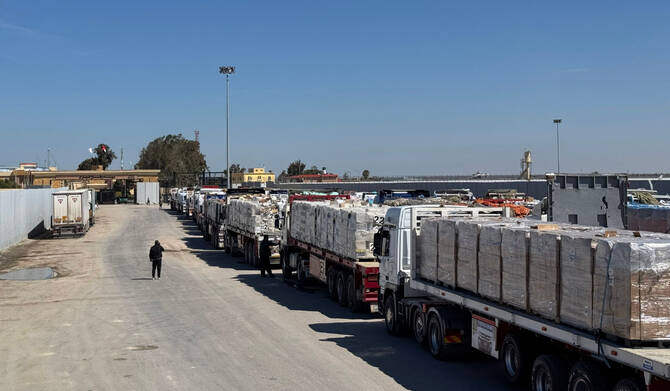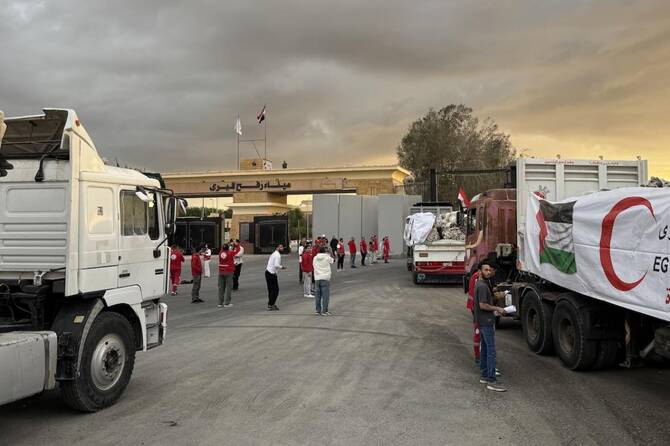
Gaza’s vital Rafah border crossing with Egypt will reopen next week. Palestinian official Ali Shaath made the announcement on Thursday via video link from Davos. He spoke during an event hosted by US President Donald Trump. The reopening fulfills a key condition of the October ceasefire brokered by Trump. The Rafah crossing is Gaza’s main gateway to the world. Consequently, its reopening will allow the entry and exit of Palestinians for the first time in months. Shaath called the crossing “a lifeline and symbol of opportunity.”
The crossing has been largely shut since the Israel-Hamas war began in October 2023. Israel has controlled the Rafah crossing since 2024. The ceasefire deal left Israel in control of over half of Gaza, including the border area. Hamas controls the remainder of the enclave. There was no immediate comment from Israeli authorities on the reopening announcement. The move signals a significant step in implementing the stalled ceasefire terms. It also represents a concrete development from Trump’s “Board of Peace” initiative launched in Davos.
Significance of the Rafah Crossing Reopening
The Rafah crossing is critically important for Gaza’s 2.3 million residents. It is the primary passage for people seeking medical care, education, or family reunification abroad. Furthermore, it is a conduit for essential goods not entering through Israeli-controlled crossings. The prolonged closure severely restricted movement and deepened humanitarian suffering. Therefore, reopening it restores a fundamental freedom and a tangible connection to the outside world.
Ali Shaath emphasized the symbolic weight of the decision. He stated that opening Rafah signals “Gaza is no longer closed to the future and to the war.” This language frames the move as a transition from conflict to recovery. The reopening will likely facilitate the return of some displaced Palestinians. It may also allow more robust delivery of reconstruction materials. However, operational details, such as eligibility criteria and daily capacity, remain unclear. These specifics will determine the crossing’s practical impact.
Political Context and the ‘Board of Peace’
The announcement occurred within a highly political setting. Ali Shaath is the Palestinian technocrat leader backed by Washington to administer Gaza. He made the statement during President Trump’s event launching the “Board of Peace.” This body aims to cement the Gaza ceasefire and oversee reconstruction. The Rafah reopening is its first publicly announced achievement. This timing suggests coordination between US, Egyptian, and Palestinian stakeholders.
However, the situation remains complex. Israel retains control of the crossing area under the ceasefire terms. Its cooperation is essential for sustained operation. The involvement of Hamas, which still controls part of Gaza, is another complicating factor. The reopening likely resulted from behind-the-scenes negotiations involving all parties. It demonstrates a rare area of pragmatic agreement, even amid deep political divisions. The coming days will test whether this agreement holds in practice.
Humanitarian and Economic Implications
The humanitarian implications of reopening are potentially vast. Thousands of patients urgently need medical treatment outside Gaza. Students await university places abroad. Families separated by the war yearn for reunion. The crossing will alleviate some of this acute human suffering. It will also allow Palestinian businessmen and laborers to resume travel for work.
Economically, the crossing can stimulate Gaza’s crippled economy. It enables the import of construction materials for rebuilding homes and infrastructure. It also allows the export of Palestinian goods, reviving a key sector. However, the extent of these benefits depends on the crossing’s operational rules. If procedures are overly restrictive or slow, the impact will be limited. The international community will likely monitor the process closely to ensure it meets humanitarian standards.
Challenges and Security Considerations
Sustaining an open Rafah crossing presents significant challenges. Security coordination between Egypt, Israel, and Palestinian authorities is delicate. All parties fear the movement of weapons or militants. Therefore, stringent security checks will likely be in place. These checks could create long delays and frustrate travelers. Another challenge is managing the high volume of expected traffic after such a long closure.
Infrastructure at the crossing may also need repair after months of military activity. Ensuring a smooth flow requires functional terminals, scanners, and administrative offices. Funding and staffing these operations is another hurdle. Egypt, which borders Rafah, will bear much of the operational burden. It will need assurances from Israel and international partners to proceed confidently. The successful reopening next week will be a first step; maintaining it will be an ongoing test.
A Step Toward Normalization?
The reopening of the Rafah crossing is a necessary step toward normalizing life in Gaza. It restores a basic right of movement that has been denied for years. If managed effectively, it can build trust and create momentum for further ceasefire implementation. However, it is just one element in a vast reconstruction and recovery process.
Much larger issues, like rebuilding destroyed cities and establishing a stable governance structure, remain unresolved. The Rafah opening proves that coordination can yield results. It provides a template for tackling other complex problems. The world will watch next week to see if this promised lifeline becomes a reality for the people of Gaza.