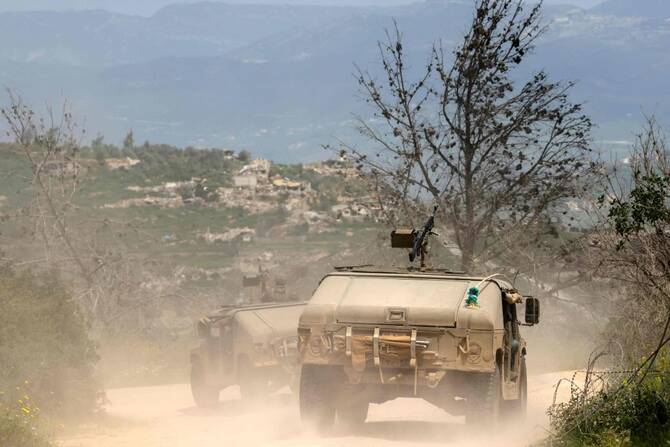
Israeli warplanes launched a major series of attacks across southern Lebanon on Sunday. These Israeli airstrikes targeted valleys and mountains north of the Litani River. The military issued specific warnings to residents of a residential complex in Kfar Hatta before its destruction. Consequently, dozens of families were left homeless following the bombardment. Lebanon’s government promptly classified the attacks as violations of the existing ceasefire agreement. The strikes represent a significant escalation in the ongoing low-level conflict. They also challenge the Lebanese army’s plan to consolidate weapons under state control in the region.
Army spokesman Avichai Adraee issued the evacuation warning publicly. He addressed residents of the compound marked in red on an attached map. The instruction ordered them to evacuate immediately and move at least 300 meters away. Adraee claimed the site housed Hezbollah military infrastructure. He stated the army would act to counter the group’s prohibited attempts to rebuild. Civilian residents appealed to the Lebanese army command to inspect the area first. Media reports indicate the army contacted UNIFIL to request a site inspection. However, Israel proceeded with a preliminary raid followed by ten heavy airstrikes on the complex.
Scope and Scale of the Bombardment
The attacks were widespread and intense. In total, Israel conducted at least 43 separate airstrikes in less than two hours. The primary targets were areas between Wadi Barghaz, Mahmoudiya, and Al-Brij. Strikes also hit the outskirts of Jbaa in the Iqlim Al-Tuffah region. The Jabbour and Qatrani heights and the outskirts of Rihan were targeted as well. These zones had suffered Israeli airstrikes just the previous week. Additionally, Israeli reconnaissance aircraft flew at low altitude over the entire Bekaa Valley. Their reach extended as far north as the city of Hermel.
An Israeli source claimed the army targeted six Hezbollah tunnels with 25 missiles. Adraee framed the strikes as a response to Hezbollah’s violations of ceasefire understandings. He alleged the attacked sites were weapons depots. “Over the past few months, Hezbollah activity has been observed at these sites,” Adraee stated. He emphasized that such activity constitutes a violation of the agreements. The army vowed to continue working to eliminate any threat. This latest barrage follows a similar escalation of Israeli airstrikes on Friday, which hit southern Lebanon and the Bekaa Valley.
Political Context and International Reaction
The escalation coincides with a sensitive political timeline. The Lebanese government recently announced the completion of the first phase of its weapons plan. This phase aimed to confine weapons south of the Litani River. A subsequent plan for areas north of the river is expected as a next step. However, the Israeli army expressed public doubt about the Lebanese army’s ability to fulfill this mission. The Ceasefire Monitoring Mechanism is scheduled to hold its next meeting in Ras Al-Naqoura on January 17th. This meeting will now likely address these serious violations.
International figures have begun reacting to the developments. French President Emmanuel Macron welcomed what he called encouraging statements from Lebanese authorities. He referred to the restoration of the state’s monopoly on weapons. Macron posted on X that this process must be pursued resolutely. He called the plan’s second phase a crucial step. The French leader affirmed that France remains fully committed to Lebanon and its army. He also noted an upcoming international conference in Paris. The conference aims to provide Lebanon and its army with concrete means to guarantee sovereignty.
Impact on Civilians and Local Response
The human impact of the Israeli airstrikes was immediate and severe. The destruction of the Kfar Hatta compound displaced numerous families. Lebanese Civil Defense personnel quickly moved to block the road between Kfarhatta and Kfarmelki for safety. The strikes create a climate of fear and instability for residents in the border region. They also complicate the Lebanese army’s delicate security efforts. The army’s mandate is to assert state authority without triggering broader conflict. These intense Israeli airstrikes test that balancing act and challenge the state’s credibility.
The broader strategy appears to be one of increased military pressure. Israel aims to compel Hezbollah to relinquish its weapons north of the Litani River. The group has consistently refused this demand. By targeting sites deep inside Lebanon, Israel signals its willingness to escalate. It also publicly disputes the effectiveness of the Lebanese state’s plan. This creates a diplomatic dilemma for the Lebanese government. It must respond to Israeli aggression while also demonstrating control over its territory and non-state actors.
The coming days will be critical for stability. The planned meeting in Ras Al-Naqoura will be a key forum. Both sides will present their accounts of the ceasefire violations. UNIFIL’s role as an intermediary and observer will be heavily scrutinized. Furthermore, the international community’s response, particularly from the United States and France, will influence next steps. For now, the widespread Israeli airstrikes have significantly raised tensions. They have also cast serious doubt on the near-term prospects for a durable peace along the Blue Line.