UAE Transport Network is entering a new phase of expansion as authorities roll out major infrastructure projects aimed at easing congestion and improving connectivity across key emirates. The latest plans focus on linking Dubai, Sharjah, and Ajman through a high-capacity highway and an integrated mass transit system.
During the first meeting of the UAE Infrastructure and Housing Council for 2026, officials outlined a roadmap to address rising transport demand. The meeting, chaired by Suhail bin Mohammed Al Mazrouei, highlighted the urgent need to support rapid urban growth. As a result, infrastructure development has become a top national priority.
At the centre of the plan is the Fourth Federal Highway project. This large-scale initiative will form a key pillar of the UAE Transport Network. The project carries an estimated cost of Dh6 billion and aims to increase road capacity between major emirates.
The proposed highway will stretch 68 kilometres and feature six to eight lanes in each direction. In addition, engineers will construct 10 major interchanges and four flyovers. Together, these upgrades will significantly improve traffic flow. Consequently, commuters and freight operators will benefit from faster and more reliable travel.
At the same time, the project will serve as a vital economic corridor. By improving connectivity, the highway will support trade and logistics across the region. Therefore, businesses will gain more efficient access to markets and supply chains.
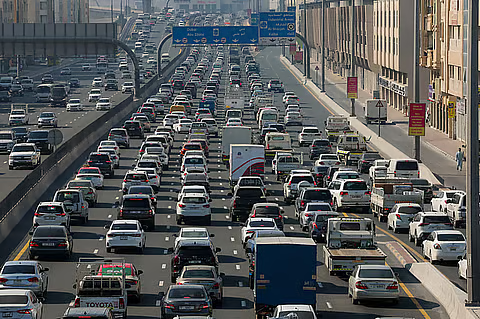
However, road expansion alone cannot solve congestion challenges. For this reason, authorities are also focusing on public transport solutions. The Council reviewed a detailed study for a mass transit network linking Dubai, Sharjah, and Ajman.
The proposed system will include 10 main routes built around Bus Rapid Transit technology. These routes will operate on dedicated lanes, which will reduce delays and improve efficiency. In addition, the network will connect directly to existing transport hubs such as metro stations and city centres.
As a result, the new system will offer a practical alternative to private vehicles. This shift could reduce traffic congestion while lowering carbon emissions. Therefore, the plan supports both mobility and environmental goals.
Meanwhile, officials have also turned their attention to climate resilience. Recent periods of unstable weather have tested the strength of transport infrastructure. In response, the Council reviewed emergency measures used during heavy rainfall.
Lessons from these events will guide future planning. Authorities now aim to design roads that can withstand extreme weather conditions. As a result, the UAE Transport Network will become more resilient and reliable over time.
Road safety also remains a key focus. Improved infrastructure, combined with better planning, will help reduce accidents and disruptions. Consequently, commuters will experience safer journeys across the emirates.
In addition, the government continues to align infrastructure projects with long-term national goals. Al Mazrouei emphasised that transport plays a central role in economic competitiveness. Therefore, future investments will prioritise high-impact projects that deliver measurable benefits.
He also highlighted the shift toward smart and sustainable mobility. This approach focuses on efficiency, environmental responsibility, and advanced technology. As a result, the UAE aims to build a transport system that meets both current and future needs.
The Council also reviewed plans to strengthen Ajman’s connectivity. In particular, officials aim to link the emirate more effectively to the third and fourth federal road corridors. This integration will ensure that development benefits extend across the Northern Emirates.
Ultimately, the expansion of the UAE Transport Network reflects a broader strategy to support growth. As populations rise and cities expand, efficient transport becomes essential. Therefore, the combination of highways and mass transit offers a balanced solution.
Looking ahead, the success of these projects will depend on execution and coordination. However, the direction is clear. By investing in infrastructure, the UAE is positioning itself for a more connected and sustainable future.